Our Blog

What is a water pick and do I need one?

April 26th, 2016
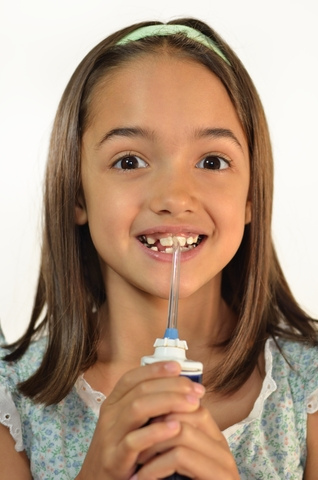
Water picks, sometimes called “oral irrigators,” make an excellent addition to your regular home care regimen of brushing and flossing. Especially helpful to those who suffer from periodontal disease and those patients of ours undergoing orthodontic treatment with full-bracketed braces, water picks use powerful tiny bursts of water to dislodge food scraps, bacteria, and other debris nestled in the crevices of your mouth. Children undergoing orthodontic treatment may find using a water pick is beneficial if their toothbrush bristles tend to get caught on their wires or brackets.

When you use a water pick, you’re not only dislodging any particles or debris and bacteria you might have missed when brushing, you are also gently massaging the gums, which helps promote blood flow in the gums and keeps them healthy. While water picks are an excellent addition to your daily fight against gingivitis and other periodontal diseases, they are incapable of fully removing plaque, which is why Dr. Tony Skanchy and our team at Alta View Orthodontics want to remind you to keep brushing and flossing every day.

If you have sensitive teeth or gums and find it uncomfortable to floss daily, water picks are a good alternative to reduce discomfort while effectively cleaning between teeth. Diabetics sometimes prefer water picks to flossing because they don't cause bleeding of the gums, which can be a problem with floss. If you have a permanent bridge, crowns, or other dental restoration, you may find that a water pick helps you keep the area around the restorations clean.

So how do you choose the right water pick?

Water picks are available for home or portable use. The home versions tend to be larger and use standard electrical outlets, while portable models use batteries. Aside from the size difference, they work in the same manner, both using pulsating water streams. A more crucial difference between water picks is the ability to adjust the pressure. Most home models will let you choose from several pressure settings, depending on how sensitive your teeth and gums are. Most portable models have only one pressure setting. If you want to use mouthwash or a dental rinse in your water pick, check the label first; some models suggest using water only.

Please give us a call at our Sandy, UT office if you have any questions about water picks, or ask Dr. Tony Skanchy during your next visit!


Damon® Smile: What You Should Know

April 19th, 2016

Contrary to popular belief, not all braces are created equal. More importantly, not all braces look like the hulking headgear found in 1980s teen movies. If you’re embarking on an orthodontic journey, that should give you a sigh of relief. Orthodontic technology has come a long way over the years. As a result, Damon Smile braces offer a world without elastic ties. Imagine that! Here are three things that make Damon Smile braces different from conventional braces.

More Comfort and Fewer Adjustments

Damon Smile braces use light, “shape memory” titanium wires. Low-friction force guides the teeth into place, creating less discomfort for you than conventional braces. Instead of elastics, Damon Smile braces use a specialized slide that helps the archwire guide the teeth into place. The teeth move freely, quickly, and comfortably. Without traditional ties and elastics, Damon Smile braces require no tightening and fewer adjustments.

Less Treatment Time

For the most part, conventional braces are worn anywhere from 18 months to two years. However, due to its unique, elastics-free technology, treatment with Damon Smile braces is often considerably faster. If you’re starting on an orthodontic journey, then chances are that's the type of thing you want to hear. While the amount of time a person wears braces varies from case to case, Damon braces typically get the job done faster than conventional braces.

Fewer Orthodontic Appointments

Coming to our Sandy, UT office is probably not on the top of your list of things do, though we do love seeing you! However, Damon braces offer a convenient and hassle-free orthodontic experience. Why? The self-ligating braces require no tightening and fewer adjustments, which in turn means you're going to have far fewer visits with Dr. Tony Skanchy during your treatment. Chances are, that's the sort of thing that's going to put a smile on your face.

Invisalign® vs. Traditional Braces

April 12th, 2016

A great smile can go a long way. Scientific research suggests that people who smile are perceived as more attractive and confident than those who don’t flash their pearly whites. When it comes time to invest in orthodontics to improve your beautiful smile, choosing the best option can be daunting. Comparing Invisalign to traditional braces is a great way to determine what orthodontics make most sense for your unique smile.

How is Invisalign different?

Unlike traditional braces, in which brackets are affixed onto each tooth and connected by wires Invisalign corrects orthodontic problems using a set of clear trays. These trays are specially formed to fit your teeth, allowing you to wear them 24/7.

Aesthetics

One of the primary advantages of Invisalign is that the clear trays are nearly invisible. Particularly for adults self-conscious about appearing professional with traditional braces, Invisalign can correct orthodontic issues without capturing the notice of others. Their nearly invisible appearance is one of the topmost reasons that orthodontic patients choose Invisalign.

Complexity of the Orthodontic Problem

Invisalign works well for people who have relatively minor problems, such as crooked teeth or small gaps between teeth. For more complex problems, particularly issues with bite or vertical problems (i.e., one tooth being significantly higher than another), traditional braces may be better at pulling teeth into alignment.

Eating and Drinking

Invisalign trays are removable, meaning that you cannot eat or drink while wearing them. Unlike traditional braces, however, you are not limited in the foods you may eat. Chewy, sticky, or hard foods may be eaten, provided that you brush your teeth before reinserting the Invisalign trays.

In the end, only you can weigh the pros and cons of Invisalign versus traditional braces. Consult with Dr. Tony Skanchy to understand how these orthodontic interventions may work for your unique situation.

What is early intervention?

April 5th, 2016

Many developing orthodontic problems can be intercepted and corrected if diagnosed and treated at an early age. Dr. Tony Skanchy and our team at Alta View Orthodontics recommend children have their first orthodontic evaluation no later than age seven, or younger if the front four permanent teeth have replaced the baby teeth. Early treatment, also known as interceptive treatment or Phase I treatment, provides both timely detection of problems and greater opportunity for more effective treatment. Early intervention guides growth and development, preventing serious problems later.

If your child is showing these signs, it may be time to think about early orthodontic treatment:

  • Early or late loss of baby teeth (your child should typically start losing teeth around age five or six, and will have all their permanent teeth in around age 12 to 13)
  • Difficulty chewing and/or biting
  • Mouth breathing
  • Sucking his or her thumb
  • Speech impediment
  • Protruding teeth (the top teeth and the bottom teeth extend away from each other)
  • Crowded front teeth
  • Teeth that don't come together in a normal manner or even at all

Early intervention will greatly reduce the severity of your child’s case, and therefore reduce the length of treatment time and cost for a second phase of treatment when all of his or her permanent teeth have erupted. An evaluation at our Sandy, UT office will determine if your child’s dental and skeletal growth is proceeding properly or if interceptive treatment is needed. Many times, a more severe problem can be corrected using sophisticated removable appliances instead of traditional orthodontic treatment.

To schedule a consultation for your child to visit with Dr. Tony Skanchy, please give us a call! We will provide your child with an initial exam, and discuss with you the best steps to take toward caring for your child's smile.

Back to Top