Our Blog

What Your Braces Rubber Band Color Says About You

September 27th, 2016

However you may feel about having to wear braces, choosing the color of your rubber bands is sure to bring a smile to your face. Whether you want to express your creativity, coordinate your braces with your outfits, or show some serious school spirit, decorating your mouth with colorful bands takes some of the stress and self-consciousness out of wearing braces. So what do your rubber band colors say about you? Look no further than our rubber band horoscope.

Red. You’re intense and forward thinking, and that you won’t back down no matter how big the challenge. Red is also the color of the heart, so red rubber bands indicate that you’re a caring, loving person.

Blue. Blue means you’re chill – as cool as a cucumber. You’re one cool customer, as the saying goes. You’re relaxed and calm, even when your mom says you can’t chew any gum or eat popcorn because of your braces.

Green. Look at a traffic light and green means go, right? So you’re the type of person who’s always on the move. Go, go, go! It also means you’re generous and kind. Green is the color of nature and spring, so it says you love Mother Earth. Perhaps you even recycle. Green is the color of good luck.

Orange. You’re daring and wild, flamboyant and fun. Orange may indicate you’re an artist or a drama student. It says you have a big personality and that you don’t care what other people think about you. However, orange is also the color of balance and energy. And being flamboyant and fun takes a lot of energy!

Purple. You’re the creative type, for sure. You beat to a different drummer and think outside the box. It says you're mysterious. Purple is the color of royalty, and when you wear your purple rubber bands you are royally cool.

Color Combinations

What if you can’t choose just one color? Well, you can decorate your teeth with alternating colors. You can choose the colors of your favorite sports team or holiday colors like red and green. If you’re still stumped as to what colors to choose, ask Dr. Tony Skanchy or a member of our team. We can let you in on all the trends our other patents are sporting at our Sandy, UT office!

Stars Who Had Braces

September 20th, 2016

Not everyone is born with a million-dollar smile, not even some celebrities. The following stars have all had their moments as a “brace face,” either as a child, teenager, or adult. You might be surprised to learn about stars who had braces (including Gwen Stefani, who got braces just because she could!).

Take a look at some famous faces who sported braces!

Emma Watson: Emma admits to going through a rather awkward stage that included “terrible skin,” fluctuating weight, and braces. But look at the swan that emerged!

Tom Cruise: Who would have thought that one of the world’s most famous smiles could use an overhaul? Well, Mr. Cruise pulled it off … and most people didn’t even know. He wore “invisible” braces that had ceramic brackets for a few months just after his 40th birthday. And the results were pretty WOW!

Dakota Fanning: This lovely young actress had some troublesome teeth when she was younger. However, braces and dental work gave her that stunning star-quality smile we see now. Props to her, though, for staying real. She sported her headgear during an appearance on The Tonight Show and didn’t bat an eye.

Gwyneth Paltrow: The stunning Ms. Paltrow, who, in 2013 was named the Most Beautiful Woman by People Magazine, wore braces in high school. And she probably carried it off with the poise and grace for which she is so famous today.

Niall Horan: This member of One Direction, the boy band that’s currently tearing it up (and breaking some hearts along the way) wore his braces for several months. He got them removed in April 2013.

Other notable celebs who have had braces include Faye Dunaway, who got hers at the age of 61! Ryan Seacrest, Miley Cyrus, Justin Bieber, and Drew Barrymore also belonged to the metal mouth club at one time or another.

What is comes down to is this: It isn’t whether you wear braces that are fully hidden, ceramic brackets, or have the traditional metal train tracks running across your teeth. Nope, it’s all about how you work it!

How do braces move my teeth?

September 13th, 2016

Great question! Tooth movement is your body’s natural response to light pressure applied by braces over a period of time (usually two years). Braces work by using brackets that are glued onto your teeth; these brackets have small slots, and that is where Dr. Tony Skanchy and our team insert orthodontic wires. These wires are held in place by small elastic ties that fit around the brackets. As time passes during your treatment, these wires apply pressure on your teeth, which sets in motion the movement of your teeth into their desired positions. Each of your teeth has a different size and shape to them, as do the brackets. Each bracket is custom-made for the particular tooth on which it’s supposed to fit.

Not long ago, orthodontists had stainless steel wires and that was about it. Today, however, we have a number of different high-tech wires at our disposal to move your teeth faster and more comfortably.

When you first get your braces on, the first wire or two will typically be very flexible, but still strong enough to apply a constant force on your teeth. As your teeth straighten out over time, however, Dr. Tony Skanchy will use progressively thicker and firmer wires to help move your teeth in place for an ideal bite.

Every time you visit our office for an adjustment, we will swap out the wires in order to keep putting pressure on your teeth, which is why it’s so important for you to keep your adjustment visits during your treatment. Most adjustment appointments are scheduled four to eight weeks apart to give your teeth time to move.

As for rubber bands and elastics, most of our patients will need to wear elastics or rubber bands at some point during their treatments. These elastics typically go from one or more of the upper braces to one or more of the lower braces, and pull on your teeth to move them in the direction they need to move in order to achieve an optimal bite.

If you have any questions about wires, brackets, or elastics, or have any general questions about your treatment, please give us a call at our Sandy, UT office.

I have halitosis. What can I do?

September 6th, 2016

Halitosis is the fancy, scientific word for “bad breath.” Dr. Tony Skanchy and our team know there are several reasons why you may have halitosis; let’s look at a few:

  • Gum disease (also known as periodontal disease) – There are five main types of gum disease, and each one can range from mild to severe. For example the most common one is gingivitis; it is caused by bacteria in the plaque that has been allowed to build up, usually as a result of poor oral hygiene. A more serious and uncommon type of gum disease is called necrotizing periodontal disease. It is most common in people who have a suppressed immune system.
  • Smoking
  • Dry Mouth – This can be caused by something as simple as a medication you take.
  • Food – Of course, if you eat something that is potent like garlic, it is going to give you bad breath.
  • Diseases of the Body – Some diseases such as sinus infections and diabetes, among a few other types of infections, can also cause you to have halitosis.

How to Get Rid of Halitosis

The most obvious answer to how to get rid of halitosis is to practice good oral hygiene, although, depending on the cause of halitosis it may not be that simple. If you have an infection that is causing the halitosis then you may need an antibiotic to clear up the infection and then the bad breath will go away. Here are more tips:

  • Brush your teeth after every meal and before bed.
  • Floss your teeth. The more plaque you get out of your teeth, the better chance you have of not getting cavities or bad breath.
  • Address any medical conditions that are not related to your teeth that can be causing the halitosis.
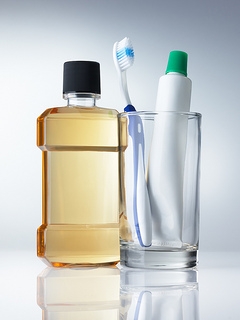
  • Ask Dr. Tony Skanchy for a prescription mouthwash that kills bacteria.

Halitosis (bad breath) can be an embarrassing condition to live with, but there are plenty of ways to get rid of it permanently. Start by talking to a member of our team at our Sandy, UT office.

Back to Top